Moving in Atlanta can feel overwhelming, especially when it comes to clearing out clutter. Leftover items like old furniture or unused boxes can cost you time, money, and even part of your security deposit. The good news? Decluttering doesn’t have to be a headache. Start early, tackle one room at a time, and focus on what you truly need. For everything else, WasteMatch makes junk removal easy - just snap a photo, compare bids from local haulers, and schedule a pickup within 48–72 hours.
This guide will walk you through practical steps to save money, reduce stress, and leave your rental spotless - so you can move out with confidence and keep your deposit intact.
Step 1: Build a Decluttering Schedule Based on Your Move Date
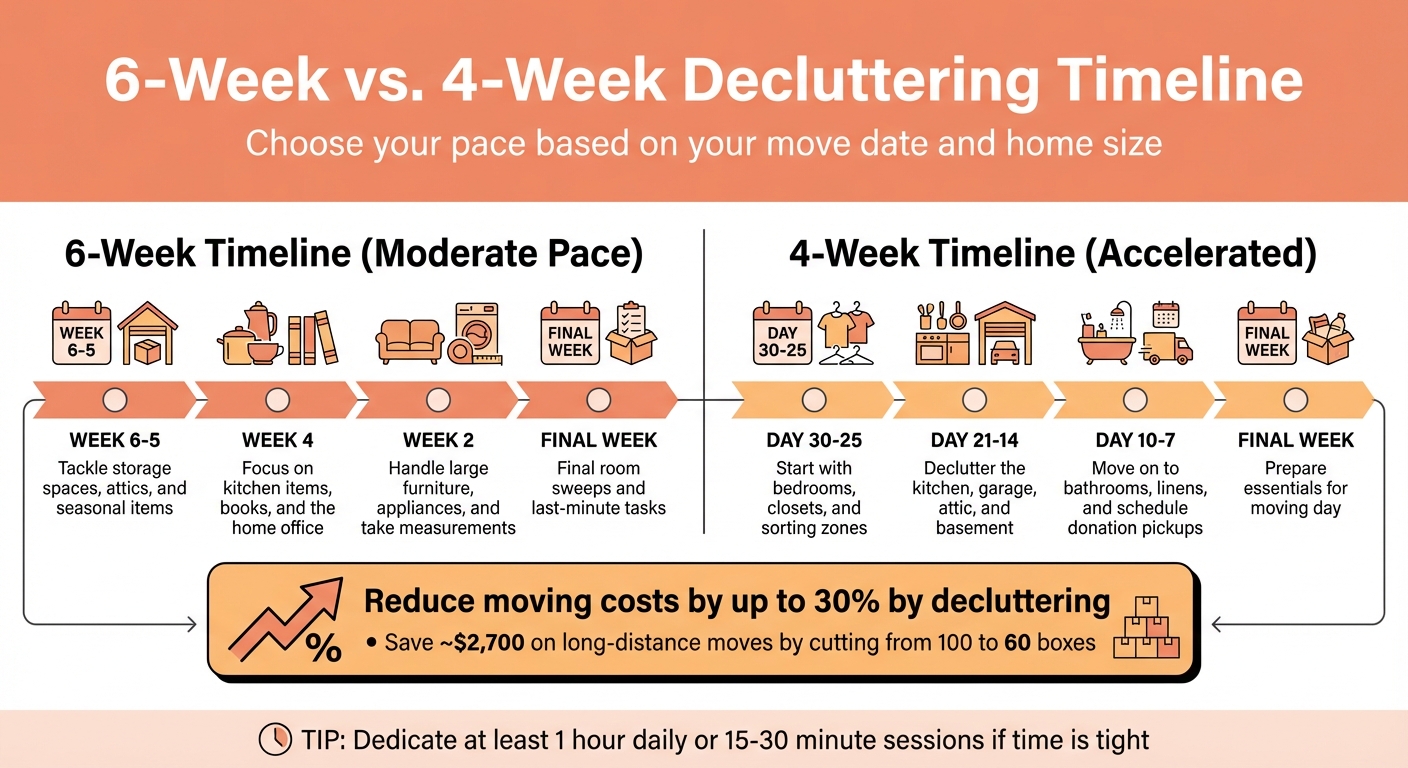
6-Week vs 4-Week Decluttering Timeline for Moving in Atlanta
Planning ahead is key when it comes to decluttering for a move. Ideally, you’ll want to start 6–8 weeks before your moving day to avoid last-minute chaos. This is especially important in Atlanta, where moving season can get hectic, and services like donation pickups or junk removal often fill up quickly. If you’re on a tighter timeline, a 4-week plan can work, but it’ll require more focused effort.
Divide the process into smaller, manageable tasks to stay on track and avoid feeling overwhelmed. As Amy from NeededInTheHome.com suggests:
When you are getting ready to move, you need to always be thinking, of less to move.
Decluttering doesn’t just save time - it can also save money. By cutting down on the number of items you move, you could reduce your moving costs by as much as 30%. For instance, trimming your load from 100 boxes to 60 boxes might save you around $2,700 on a long-distance move. Tackle one room at a time, and use the 12-month rule: if you haven’t used or worn something in the past year, it’s probably time to let it go.
Here’s how to structure your decluttering schedule based on your timeline.
6-Week vs. 4-Week Decluttering Timeline
The schedule you choose will depend on how much you own and how close you are to your lease end date. A 6-week plan is best for larger homes or when you want time to sell items online. On the other hand, a 4-week plan is more practical for renters with a standard 30-day notice.
| Timeline | Week 6-5 / Day 30-25 | Week 4 / Day 21-14 | Week 2 / Day 10-7 | Final Week |
|---|---|---|---|---|
| 6-Week (Moderate Pace) | Tackle storage spaces, attics, and seasonal items | Focus on kitchen items, books, and the home office | Handle large furniture, appliances, and take measurements | Final room sweeps and last-minute tasks |
| 4-Week (Accelerated) | Start with bedrooms, closets, and sorting zones | Declutter the kitchen, garage, attic, and basement | Move on to bathrooms, linens, and schedule donation pickups | Prepare essentials for moving day |
Plan to dedicate at least an hour each day to decluttering, or try shorter 15–30 minute sessions if your schedule is tight. Save sentimental items for the end - starting with them can slow you down emotionally. Once you’ve sorted through everything, you’ll be ready to arrange for donation pickups or junk removal for anything you can’t sell or give away.
sbb-itb-c7714ed
Step 2: Get Your Supplies and Set Up Sorting Categories
Before diving into decluttering, gather everything you’ll need: cardboard boxes, sturdy trash bags, packing tape, permanent markers, and color-coded labels (like green for the kitchen and blue for the bathroom). Having these supplies handy helps you stay focused and avoids interruptions. Plus, getting organized now can prevent security deposit deductions and keep moving costs in Atlanta under control.
To make sorting easier, try the Four-Box Method. Label your boxes as "Keep", "Donate", "Sell," and "Trash." If you’re unsure about certain items, have a "Maybe" box - but set a firm deadline to revisit it. Anything left in the "Maybe" box a week before your move? Donate it without hesitation.
Here are a few quick rules to simplify decisions:
- If you haven’t used it in the past year, it’s time to part ways.
- Can it be replaced in under 20 minutes for less than $20? Let it go.
- For tricky items, give yourself just 5 seconds to decide.
Making these choices now will make the pickup process with WasteMatch much smoother later on. As Sarah McCorriston, Owner of Nixxit, advises:
"When preparing for a move, focus on decluttering items that you haven't used in the past year, are broken beyond repair, or hold little sentimental value."
To keep track of everything, consider recording your sorted items digitally - whether in a spreadsheet or a Google Doc. This can be helpful for both tracking and insurance purposes. With your supplies ready and a clear plan in place, tackle the decluttering room by room to keep the process efficient and stress-free.
Step 3: Declutter One Room at a Time
Taking on one room at a time helps you avoid burnout while making noticeable progress. Begin with storage-heavy spaces like closets, pantries, or that cluttered corner of your bedroom. These areas often contain items you rarely use, making them easier to sort through without disrupting your daily life. As Amy from NeededInTheHome.com wisely points out:
If you can get rid of it now, you won't have to move it, unpack it, and find a home for it at the new place, so look for duplicates in type and toss, donate, or sell the extras.
After tackling storage spaces, move on to areas like the kitchen and closets, which are often hotspots for unused items. This step-by-step approach allows you to handle each space efficiently without feeling overwhelmed.
Start with Kitchens and Closets
The kitchen tends to accumulate unnecessary duplicates and expired items. Begin by inspecting your pantry and fridge, discarding expired goods like old spices, canned food, and condiments. Use the "Rule of Threes" to simplify: keep only three of each utensil. Consider letting go of single-use gadgets that rarely see the light of day - like that air fryer collecting dust or the bread maker you’ve barely touched.
Once the kitchen is in order, shift your focus to your closets. The one-year rule is a helpful guide here. Brittany Kline, Owner of The Savvy Mama, suggests:
In the bedroom, focus on minimizing clothing by applying the one-year rule: If it hasn't been worn in a year, it's likely time to sell or donate it.
Don’t stop at the hanging clothes; dig into dressers, under-bed bins, and nightstands. Toss mismatched socks, stained linens, and shoes that pinch or hurt. For those "maybe" items, try the 20-20 Rule: if you can replace it in under 20 minutes for less than $20, it’s probably not worth keeping.
Clearing out kitchens and closets first gives you a clearer picture of what’s left to address. With those spaces decluttered, you’ll feel ready to take on larger tasks next.
Step 4: Deal with Large Furniture and Appliances
Once you've cleared out the smaller items, it's time to focus on the heavyweights - your large furniture and appliances. Think couches, mattresses, refrigerators, and other bulky pieces that require a bit more effort to handle.
Start by assessing each item. If a couch has a broken frame, permanent stains, or signs of pests, it's best to discard it. Similarly, for appliances, weigh the cost of repair against replacement. As a rule of thumb, if repairs exceed 50% of the replacement cost, it's probably time to let it go.
Before you start moving these items, measure them against the floor plan and doorways of your new rental. In Atlanta, older buildings in areas like Midtown or Virginia-Highland often come with narrow staircases and tight entryways, which can make moving oversized furniture a challenge. Once you've confirmed what can fit, it's time to prepare these items for disposal or donation.
Here are some preparation tips:
- Mattresses: Place them in plastic bags. Many services, like CHaRM (Center for Hard to Recycle Materials) in Atlanta, require this to prevent allergens or pests from spreading.
- Refrigerators and Freezers: Defrost them at least 24 hours before pickup.
- Washing Machines: Drain them completely and secure any cords using painter's tape.
- Couches: Remove detachable legs and thoroughly check cushions for any personal belongings.
Once everything is prepped, decide whether to donate or schedule removal. For donations, ensure items meet the criteria of organizations like the Furniture Bank of Metro Atlanta. They only accept furniture in good condition - free of major stains, tears, or structural damage. A quick vacuum or steam clean can often make the difference between a donation being accepted or rejected.
If you're scheduling removal, WasteMatch Home simplifies the process. Snap a photo of your item, post it on their platform, and within minutes, you'll receive bids from verified local haulers. Members enjoy perks like priority booking with 48–72 hour pickup windows and locked-in pricing, which can save you from unexpected fees during Atlanta's busy moving season.
Step 5: Book Your Junk Removal with WasteMatch Home
When you're ready to clear out your rental and avoid losing part of your deposit, WasteMatch Home makes the process simple for Atlanta renters. Once you've sorted and prepped your items for removal, WasteMatch Home steps in to handle the heavy lifting.
A membership with WasteMatch Home costs $129 annually and includes one junk removal pickup worth up to $250. Members enjoy perks like priority booking with pickups scheduled within 48–72 hours and locked-in pricing - no surge fees during the hectic move-out season. If your plans change and you don’t use your included pickup within the year, your credit rolls forward once, so you won’t lose its value.
Here’s how it works: Take a photo of your items, post your project, and compare bids from verified local haulers. You can choose the service that fits both your timeline and budget.
Whether you need to remove a single item or clean out an entire apartment, WasteMatch Home has you covered. Their network of vetted professionals ensures reliable service, whether you're getting rid of a sectional in Buckhead or clearing out a storage unit in East Atlanta. The process is straightforward and transparent - no surprise fees, no haggling, no headaches.
Once your pickup is booked, you’re free to focus on cleaning up your space and securing your full deposit.
Step 6: Clean Your Space to Get Your Full Deposit Back
Once WasteMatch Home has hauled away your junk, it’s time to focus on a thorough cleaning. This step often determines whether Atlanta renters recover their full security deposits or lose a chunk of it. Interestingly, only 41% of renters actually get their full deposits back when moving out, often due to overlooked cleaning details.
Start with a top-to-bottom approach: clean ceilings and light fixtures first, then move downward to avoid dust settling on freshly cleaned surfaces. In the kitchen, pay special attention to the oven - scrub the interior and racks, degrease the range hood filter, and clean underneath and behind the refrigerator. In the bathroom, tackle soap scum and mildew in tubs and showers, scrub grout lines, and disinfect areas like the toilet base. Don’t forget to replace burned-out bulbs, check smoke detector batteries, and wipe down frequently touched surfaces like light switches and door handles.
If there’s any wall damage, take the time to patch it up before your final walkthrough. Use spackle to fill nail holes, let it dry, and then sand it smooth. A melamine sponge is great for removing scuff marks from walls and baseboards. Even small repairs can make a big difference, as landlords often differentiate between "ordinary wear and tear" and actual damage. Specialized Property Management Atlanta explains:
Ordinary wear and tear is the natural and gradual deterioration of the property over time, which results from a tenant's normal use of the residence.
After cleaning, document everything thoroughly. Take clear, timestamped photos of every room, including the inside of appliances and cabinets, to protect yourself in case your landlord disputes the condition of the unit. Review the "Security Deposit" section of your lease for any specific requirements - some leases may, for instance, require professional carpet cleaning receipts. Finally, make sure all keys, garage remotes, and access cards are returned on time to avoid extra charges.
A meticulous cleanup and proper documentation give you the best shot at reclaiming your full deposit.
Conclusion
Break your move into smaller, manageable steps to keep the process stress-free. Starting about four to six weeks before your move-out date allows you to sort through your belongings room by room and decide what should make the cut for your new Atlanta rental. This approach not only helps you stay organized but also sets you up for savings and a spotless rental exit. As Iredell Free News puts it:
Decluttering before your move isn't just a chore - it's an act of self-care.
Cutting down on items reduces moving costs - especially since Atlanta movers often charge by weight or time - and increases your chances of getting your full deposit back by ensuring your apartment is thoroughly cleaned. Stick to your schedule and sorting method, and you’ll finish your move feeling organized and in control.
With fewer items to move, WasteMatch Home makes removal simple and efficient. Their $129/year membership includes one pickup (worth up to $250), priority scheduling during busy move-out seasons, and locked-in pricing. All it takes is snapping a clear photo of what you need removed, booking a 48–72 hour pickup window, and letting a trusted local hauler take care of the rest.
Tackle one room at a time, and you’ll be on your way to a smoother move in Atlanta.
FAQs
What should I declutter first if I’m short on time?
Begin by tackling the items you haven’t touched in the last year. These are often the simplest to sort for donation or disposal, helping you create space right away. Prioritize larger or less essential items - think outdated furniture, unused clothes, or old appliances - to streamline the process and make noticeable progress quickly.
How do I decide whether to donate, sell, or trash an item?
Decisions should hinge on the item’s condition, value, and practicality. If it’s in working order and decent shape, donating it to a local charity or community group could be a thoughtful choice. For items that still hold value and you’re prepared to let go of, selling them through online platforms or hosting a garage sale can be rewarding. However, for items that are broken or no longer usable, ensure they’re disposed of responsibly by adhering to local guidelines or opting for professional junk removal services such as WasteMatch.
What happens if my WasteMatch Home pickup exceeds $250?
If your WasteMatch Home pickup costs more than $250, you might need to check in with WasteMatch for specific guidelines. High-value pickups could involve extra steps or special arrangements. For further information, it's best to contact WasteMatch customer support directly.